
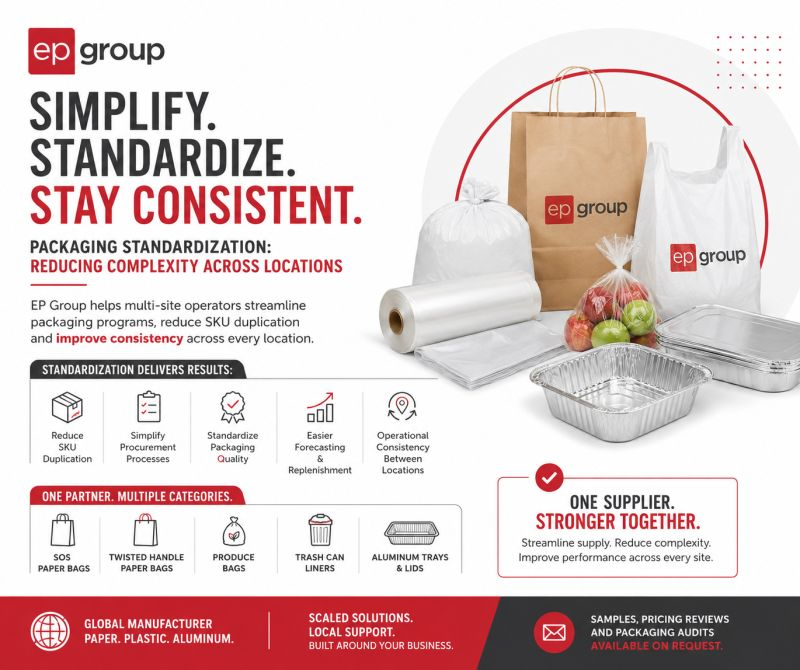
Multi-site packaging programs often drift over time. Similar products acquire different specifications, suppliers, and ordering routines—even when the underlying requirement is nearly the same.
Separate common requirements from valid exceptions
Standardization works when it creates clearer decision rules, not when it removes differences that protect product or operational performance.
Begin by mapping which specifications are truly equivalent, which have changed without a clear reason, and which must stay different because of equipment, handling, regulation, or customer experience.
Create a controlled packaging baseline
A practical review typically aligns the following areas:
- Core dimensions and performance requirements
- Approved materials and formats
- Branding and print controls
- Ordering and replenishment expectations
- Regional or equipment-specific needs
- Ownership of future specification changes
Govern the exceptions
A local difference should have an owner, documented reason, and review date. That protects necessary flexibility while preventing quiet specification drift.
The resulting program is easier to source, operate, and maintain because teams know both the standard and the reason for each approved exception.
Standardize the decision framework first. The right product specifications will follow from evidence, not from forcing every site into the same answer.